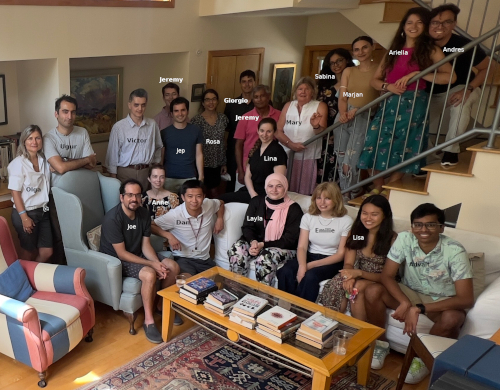
brunch, 17 July 2022, at Mary & Jeremy's, photo set up by Andres Florez
together again after 2 years!
2023. Lecture video on on Cell learning: a new paradigm for biology at the 2023 UCLA Luskin Endowment for Thought Leadership Symposium on Pushing the Boundaries: Neurocience, Cognition and Life.
2022. Plenary public lecture on Topology and genes at the 2022 Global Korean Mathematical Society International Conference.
2020. Lecture video on Thermodynamic limits in cellular information processing, at the programme on Statistical Biological Physics: From Single Molecule to Cell, held at ICTS, TIFR, Bengaluru, India.
2020. Lecture video on Hopfield barriers: the interplay of mathematics and physics in molecular biology, at the SIAM Conference on the Life Sciences 2020 (LS20), 11 June - 2 July, 2020.
2019. Lecture video on Beyond Big Data and Big Models: the role of abstraction in biology at the Workshop on Data, Knowledge and Genomic Causality, Ben-Gurion University, Dec 2019.
2019. Interview about our paper on avoidance behaviours in Stentor roeseli; and some comments on its implications.
2019. Lecture video on Some mathematical aspects of gene regulation at the SIAM Conference on Applied Algebraic Geometry, Bern, July 2019.
2018. Photographs from the School on "A Systems Approach to Biology" at the University of Buenos Aires in June 2018. Jeremy's lectures are here.
2017. Harvard Medicine Magazine has an Autumn 2017 feature on computational tools for analysing natural languages, which highlights other work of Joseph Dexter and Ben Gyori.
2015. Photographs from the Slow Science talk at Bioquant in Heidelberg on 27 May 2015.
brunch, 17 July 2022, at Mary & Jeremy's, photo set up by Andres Florez |
| previous years |
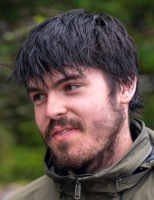
Postbac student |
I am perhaps best described by my tendency to be attracted to problems which lie at the intersections of many fields. My formal training (HBSc, University of Toronto) is in physics, with a special interest in nonlinear dynamics, and cognitive science, which is more broadly inter- and trans-disciplinary. I have previously worked in labs developing automated discovery (machine learning) and experimental robotic methods in materials science, with Prof. Alan Aspuru-Guzik, University of TorontoT, molecular computing, with Prof. Erik Winfree, Caltech, and interventions in mental health, with Prof. John Vervaeke, University of Toronto. My current interests lie in what we can learn about computing, and systems which can adaptively solve problems, from the ways living systems process information — learning from life by learning about life. This theme motivates my work studying information processing performance of molecular systems in the transient regime, and the methods by which cells learn about their environments. last updated on 9 June 2024 |
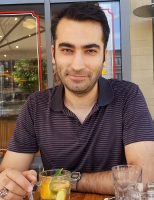
Postdoctoral fellow |
I am a biophysicist with a wide range of interests varying from osmotic fitness of bacteria to stochastic processes to non-equilibrium statistical physics. I graduated from Bogazici University with a B.A. in Physics and received my PhD degree in Biophysics from University of Maryland, College Park where I worked with Professor Sergei Sukharev on the nanoscale thermodynamics of mechanosensitive ion channels. One of the most fundamental differences between bacterial and eukaryotic gene regulation is energy expenditure. While equilibrium thermodynamics successfully describes the events that take place during bacterial gene regulation, the existence of highly dissipative processes begs the question of whether the equilibrium formalism could describe the enormous molecular complexity in eukaryotic gene regulation. In the Gunawardena Lab, I will develop the theoretical framework and design experiments to check whether or not gene regulatory systems are operating away from equilibrium. last updated on 19 September 2018 |
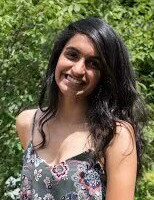
Undergraduate researcher |
I am a junior from University of Illinois at Urbana-Champaign studying Chemistry with minors in Statistics and Mathematics. My research work currently lies in computational biology. I have previously worked on projects in which I develop computational pipelines in different programming languages to process data from spatial transcriptomics technology. As a 2021 summer intern, I will be working with Rosa Martinez-Corral in exploring multi-input gene regulation functions from a theoretical standpoint. I hope to pursue an MD/PhD and am particularly interested in applying mathematical modeling techniques towards answering large scale biological questions and improving medical diagnostics. last updated on 6 June 2021 |
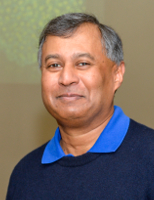
Associate Professor of Systems Biology |
I used to be a very pure mathematician, an algebraic topologist, but fell from grace some years ago (to borrow Marc Kac's gracious way of putting it) when I was a Dickson Instructor in the Mathematics Department at the University of Chicago. I volunteered to teach computer science, which made me interested in complexity, which eventually led to a long stint in industrial research at HP (Hewlett-Packard) Labs, where I ran part of the company's "blue skies" research programme. Post-genome systems biology brought complexity to centre stage and brought me to Harvard. Our focus in the group is on information processing in mammalian cells. In what sense can cellular processes be considered to "process" information? What kind of information is it and how do we measure it? How are information processing tasks implemented by the molecular mechanisms within cells? What systematic methodologies are needed for attacking such problems and how do we develop them? We approach these questions through a combination of experiment, theory and computation. last updated on 8 August 2012 |
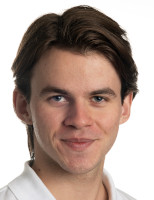 UG research student |
I am a rising senior at Carleton College studying mathematics, and an intern in the lab through the systems biology summer program. My research interests broadly include physical and mathematical approaches to understanding the complex processes that occur across many levels of biological organization. I have previously worked on computer vision methods for mouse model experiments, metabolic modeling in microbial populations, and recently, thermodynamic and information theoretic approaches to transcriptomics analysis. In the Gunawardena lab, I’ll be doing theoretical work with Dr. Ugur Cetiner on input-output functions of substrates in biochemical networks, using graph theory and Markov processes paired with data from single-molecule biophysical studies. last updated on 13 July 2024 |
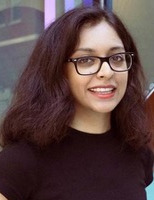
PhD student |
A mathematician by training, I am broadly compelled to explain the cell with pure and applied math. Currently, I am a 6th year Systems Biology PhD candidate at Harvard University advised by Dr. Jeremy Gunawardena. My doctoral research has been focused on using discrete mathematics, mainly graph theory and Markov processes, to model steady-state behavior in biochemical networks. In particular, I have been focused on characterizing theoretical signatures of non-equilibrium steady states, which can be used to identify departure from thermodynamic equilibrium in cellular information processing contexts. I have also been interested in expanding the mathematical foundations of the Gunawardena lab’s modeling approach, which has allowed me to explore more theoretical research questions using graph theory, applied linear algebra, spectral analysis, Markov processes, Riemannian geometry, algebraic topology, combinatorics, and category theory. In collaboration with Dr. Polly Yu at the Harvard NSF-Simons QBio Center, I have also done work in chemical reaction network theory, a mathematical field that models chemical reactions using graph theory and often involves techniques from algebraic geometry. last updated on 19 July 2023 |
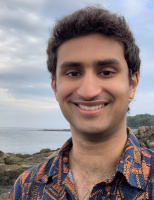
Biophysics rotation student |
I am currently a first year PhD student in the biophysics program, with an undergrad background in mathematics and biochemistry from the University of Chicago. I am broadly interested in mathematical biology, and had some brief training in undergrad in the areas of population genetics and wet-lab protein biochemistry. In the Gunawardena lab, I will be working on some theoretical analysis of single molecule footprinting data of transcription factor binding with the aim of determining whether the processes of transcription factor and nucleosome binding occur at equilibrium. last updated on 12 July 2024 |
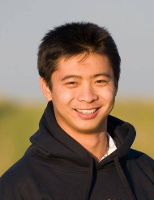
Postdoctoral fellow |
I completed my PhD in Biochemistry in 2016 at the University of Cambridge working in Gerard Evan's lab. Cancer therapies rely on targeting vulnerabilities in tumour cells that are not present in normal physiological cells. Systemic inhibition of the MYC transcription factor was shown to specific kill tumour cells, but not normal proliferating tissues, establishing a clear therapeutic window. My PhD project was therefore to identify the causal mechanisms of tumour cell death focusing on perturbations of the metabolic and apoptotic pathways. Currently in the Gunawardena group in collaboration with Galit Lahav's lab, my research project revolves around the transcription factor, p53. The aim is to functionally attribute the roles of post-translational alterations on the p53 protein following stress induction to the subsequent cell fate. The benefits in qualitatively and quantitatively decoding dynamic cell signals are invaluable both in enhancing existing cancer therapies as well as understanding evolutionary and developmental processes. last updated on 1 September 2016 |
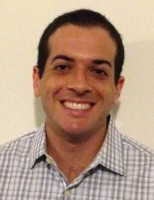
Postdoctoral fellow |
I started my academic career in mathematics and have since transitioned to think more about biological systems. I'm fascinated that organisms are able to function as they do even in the face of numerous obstacles such as external perturbations and the inherent stochasticity of molecular environments. I was previously a staff scientist at the Broad Institute where I worked on studying the role of enhancers in gene regulation with applications to human genetics. I am looking to continue more theoretical exploration of enhancers in the lab. I'm also broadly interested in the role of modelling and theory in biology and will look to apply such approaches to other biological systems. last updated on 24 May 2022 |
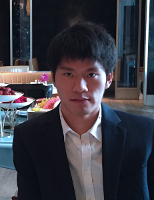
Research collaborator |
I graduated from Harvard College with an A.B. degree in mathematics and an S.M. degree in computer science in 2014. I am currently a fifth-year Ph.D. student in Harvard's applied physics program, advised by Ariel Amir and supported by the NSF Graduate Research Fellowship. I have been working with Jeremy's lab since I was an undergraduate and am interested in the "linear framework" and its applications to biological information processing and non-equilibrium statistical mechanics (PMIDs 25475875 and 27368104). My personal website is here. last updated on 13 June 2018 |